EyeQuant
An AI-powered design intelligence platform that predicts visual attention without live user testing, enabling teams to see where users look in the first seconds, measure clarity and engagement, benchmark designs against competitors, and make creative decisions that convert.
Head of Product + Design · Current
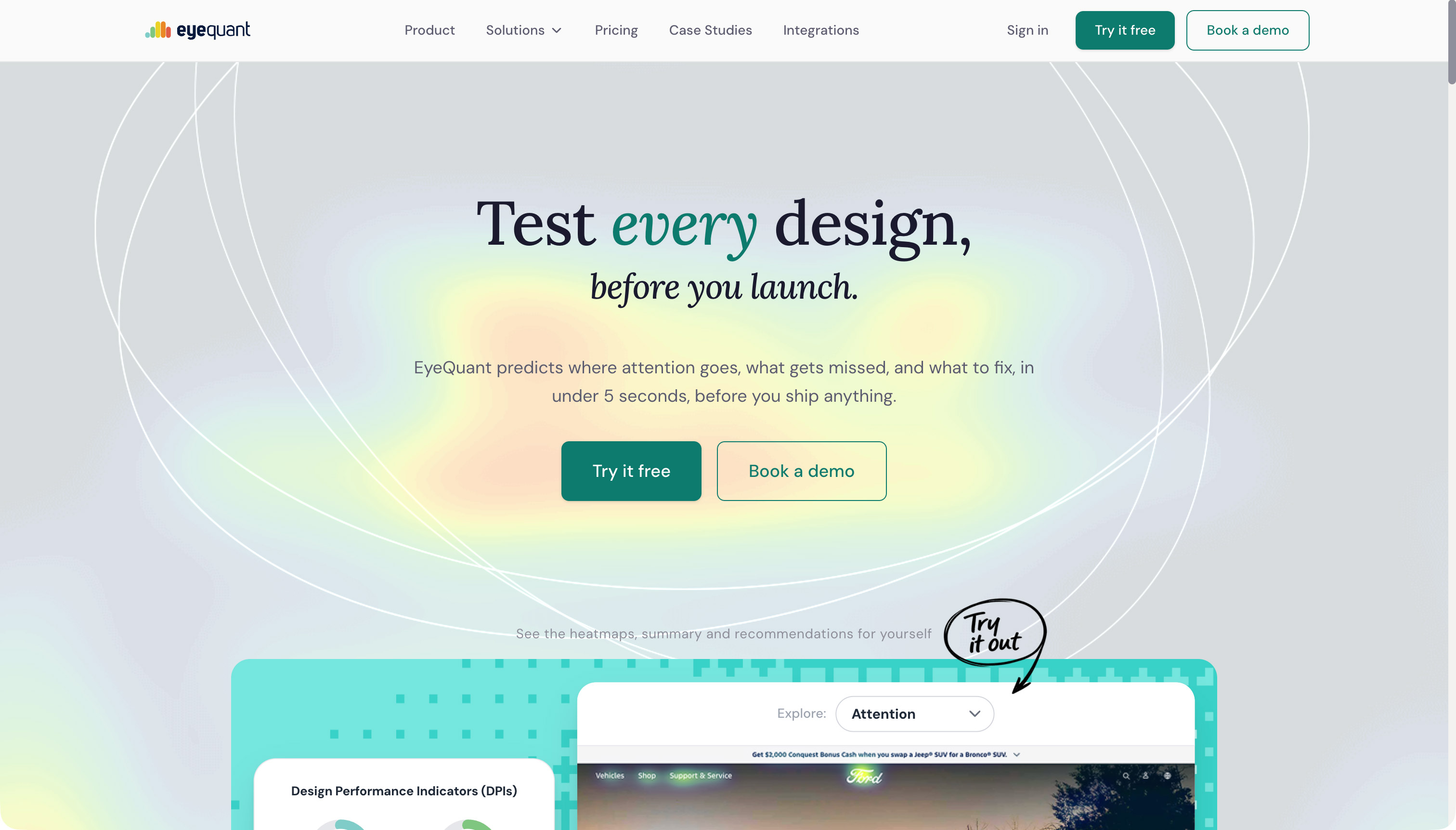
Most design decisions get tested after they ship. A page goes live, traffic arrives, and eventually the analytics tell you whether people noticed the thing you wanted them to notice.
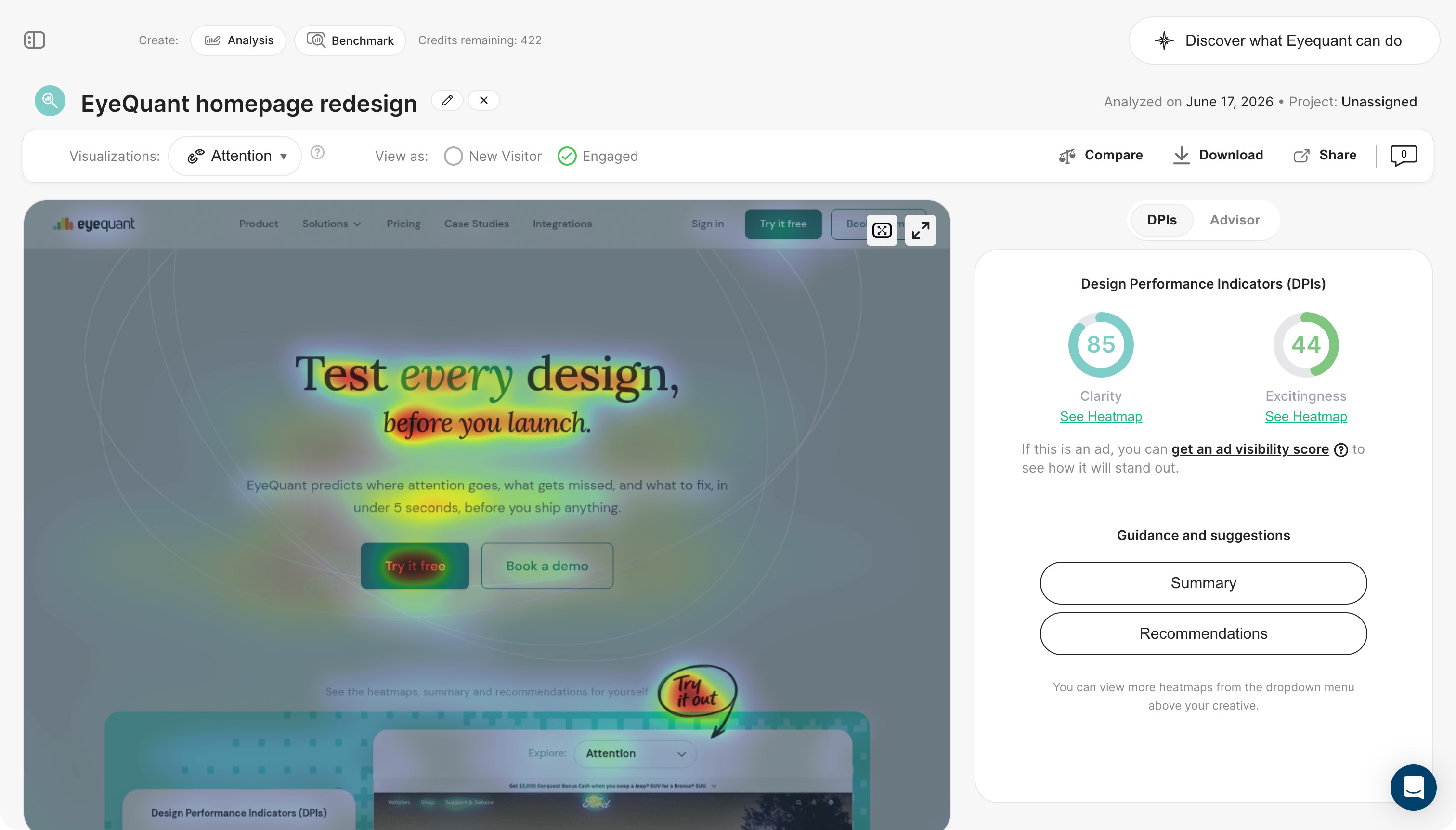
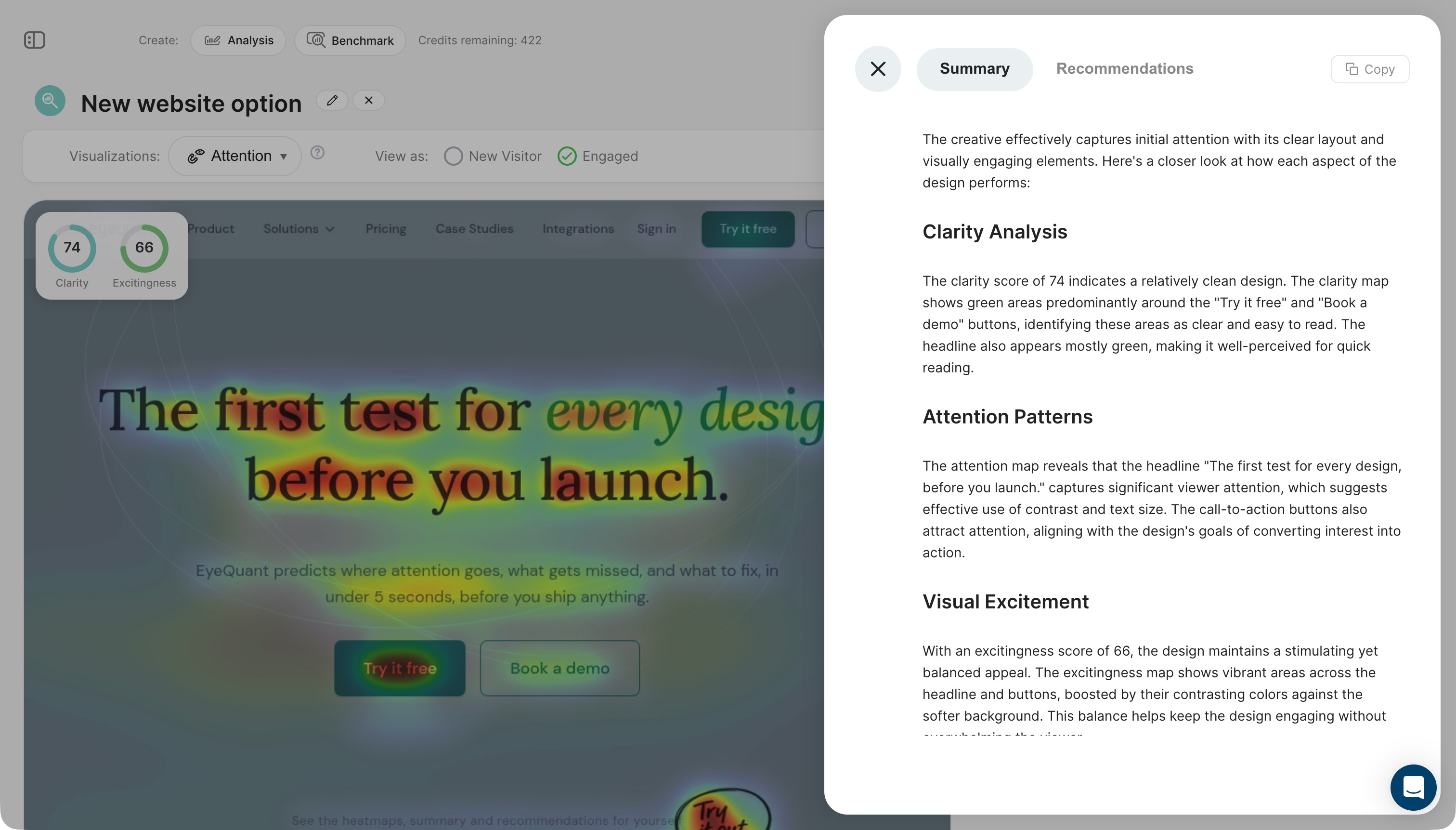
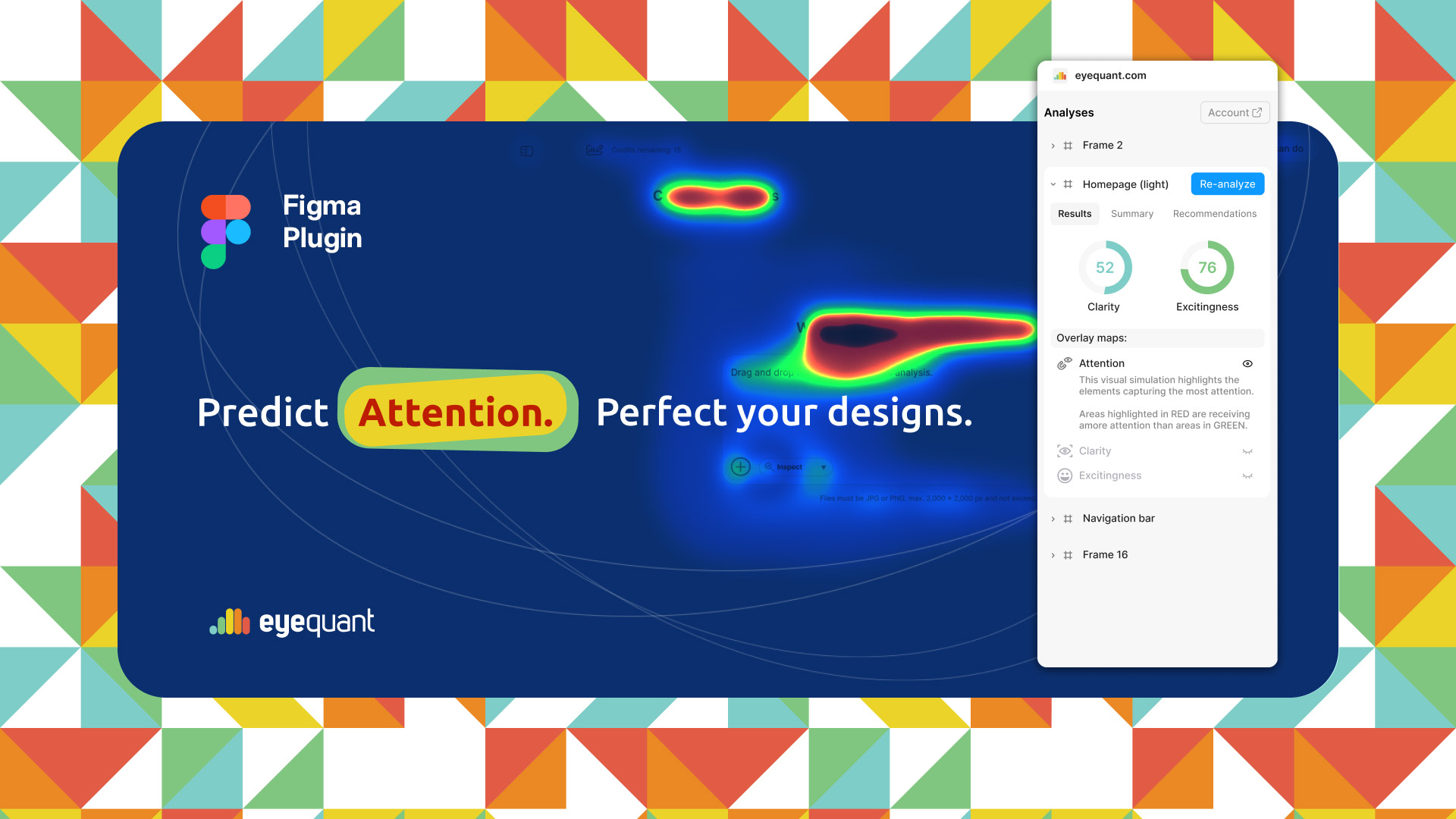
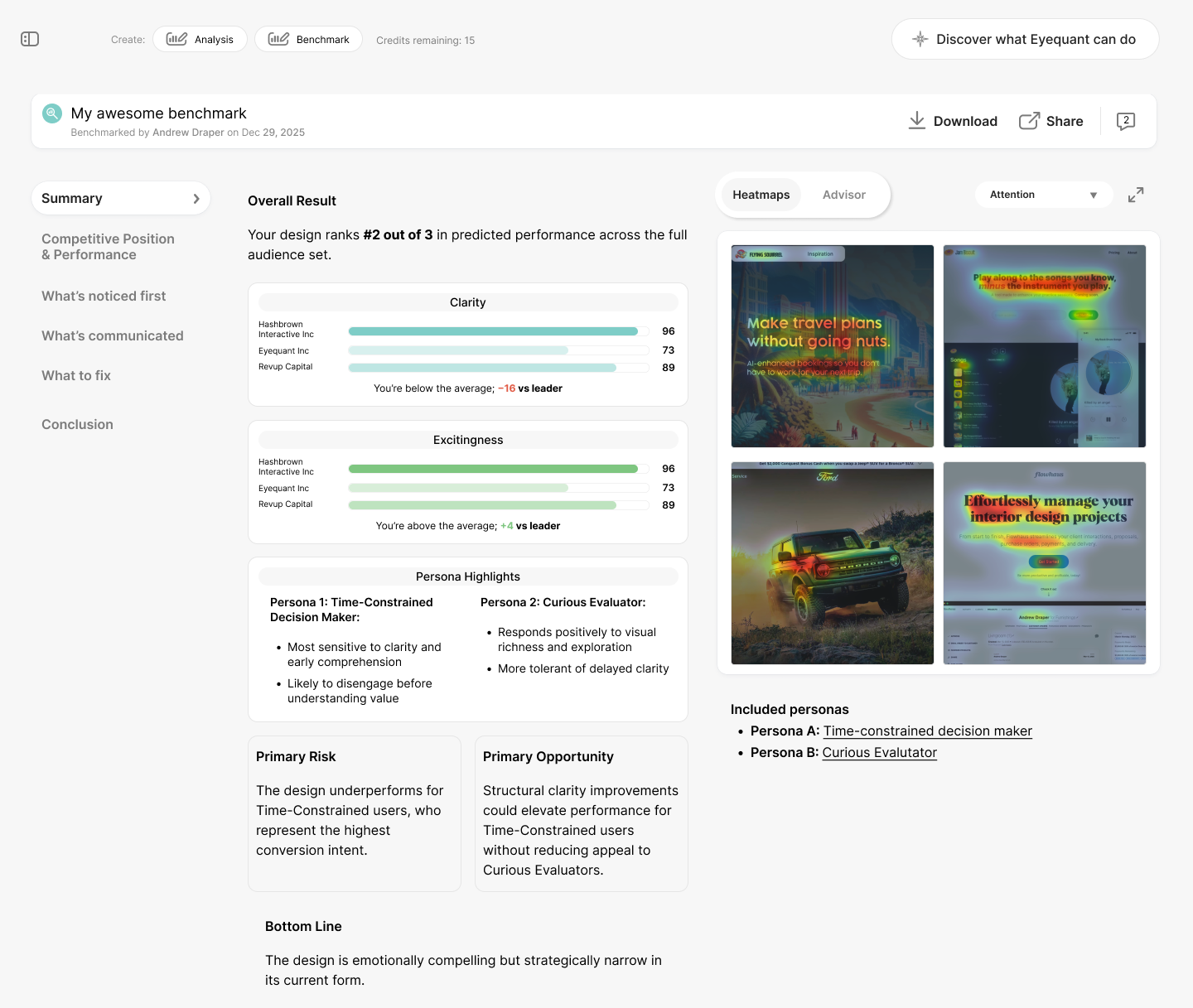
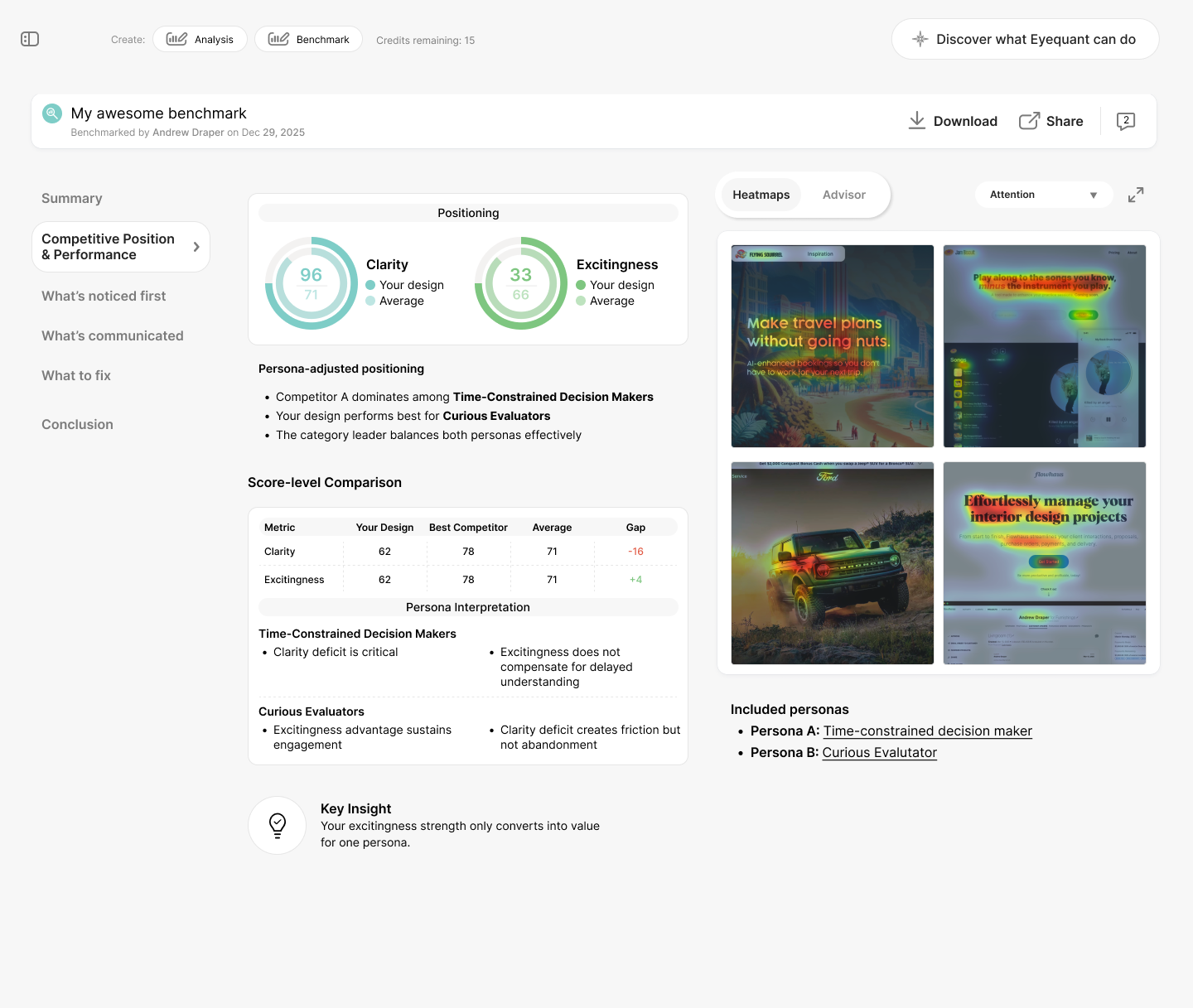
EyeQuant moves part of that question earlier. Using AI models trained on eye-tracking research, it predicts where people will look in a design, what they're likely to miss, and how clear it is, in a few seconds and without any live traffic.
I lead product and design. A lot of that work has been foundational: a six-month platform rebuild and seven major product releases.
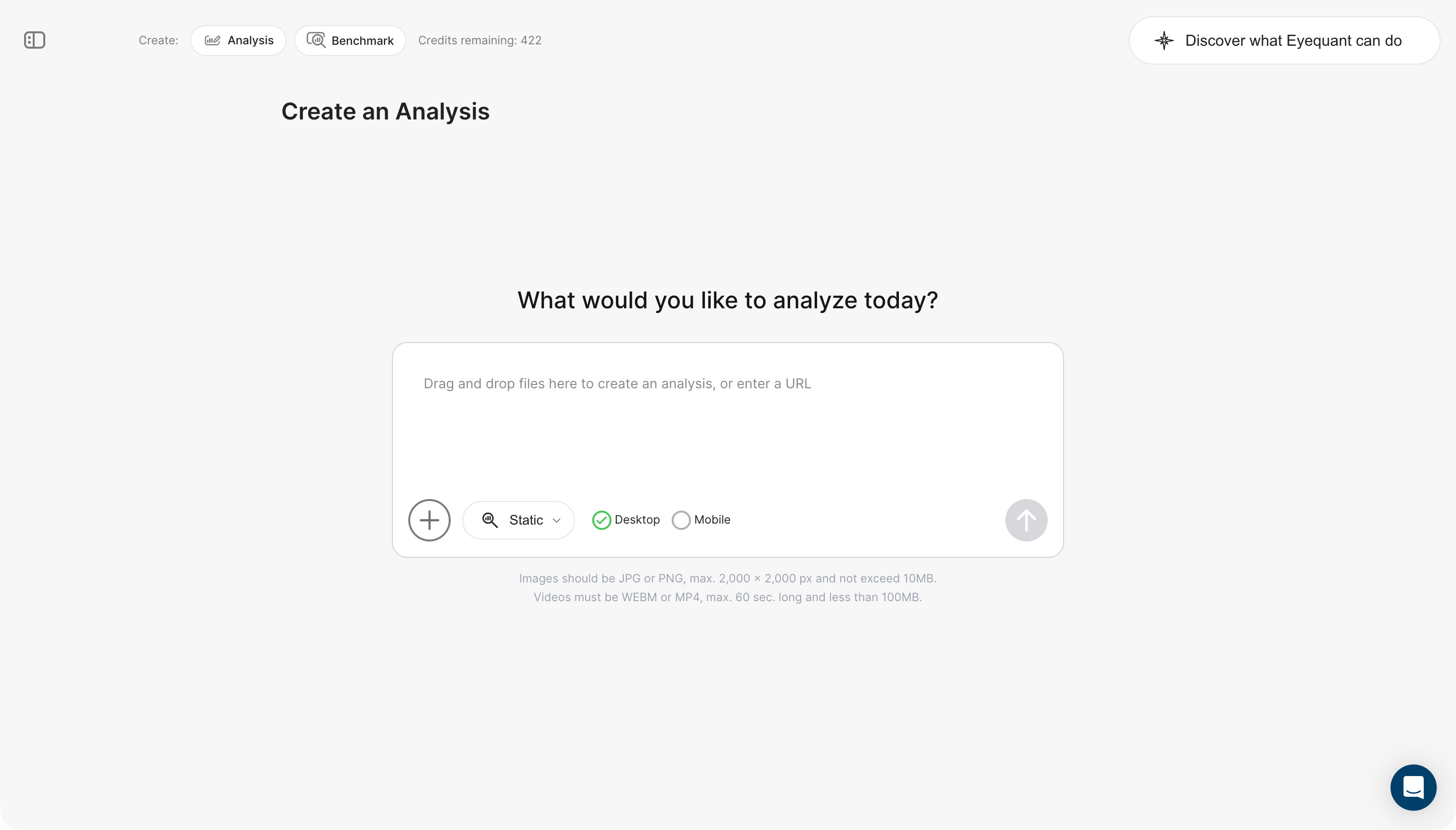
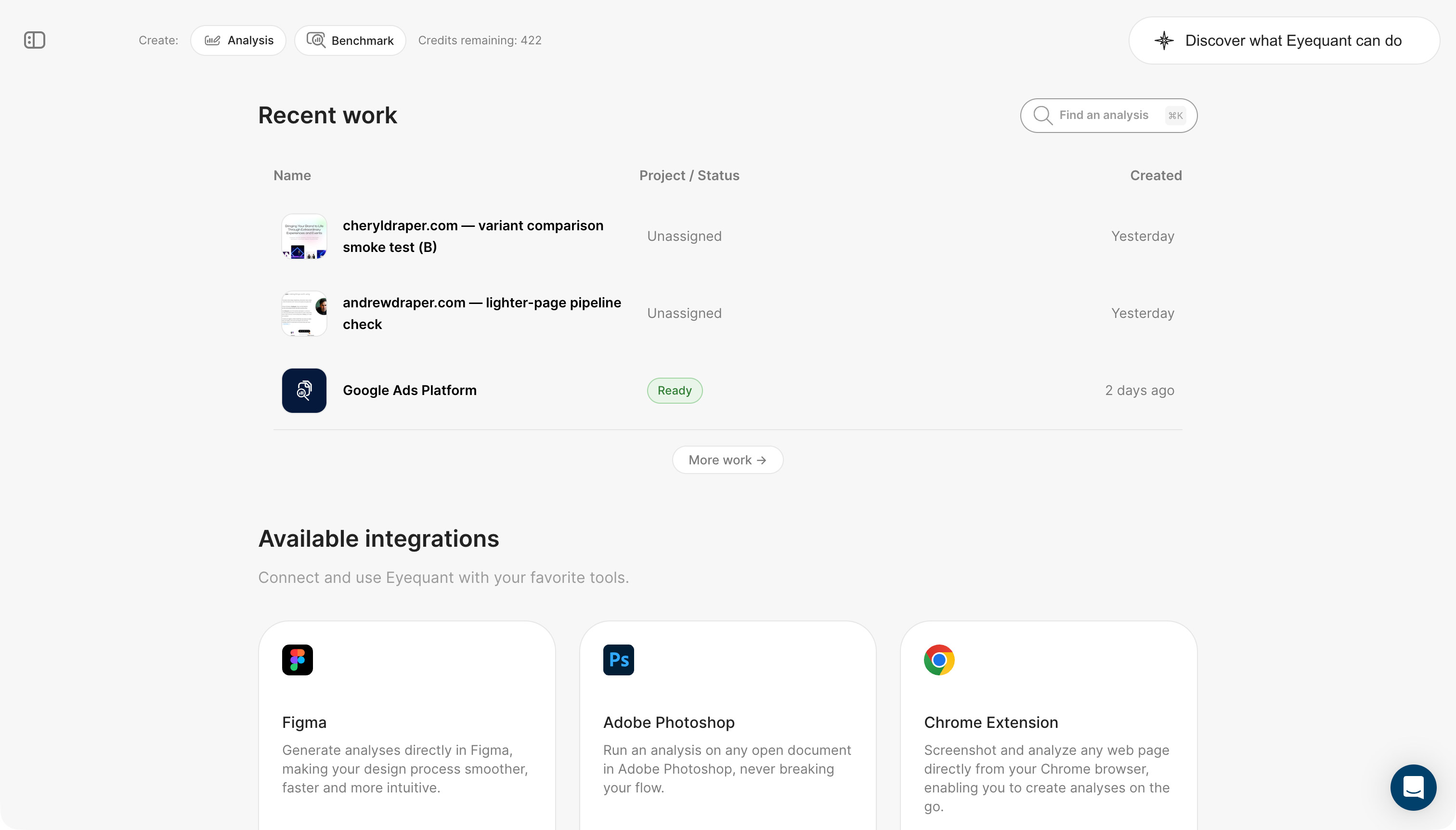
Much of it has been about moving the analysis closer to where creative work actually happens. Rather than exporting a design and uploading it somewhere else, you can now use EyeQuant inside Figma and Photoshop, in the browser, and through an API and MCP server, so agents can use it too. We've also added AI recommendations, so results come with suggestions about what to change rather than just a heatmap to interpret.
Alongside that, we've been evolving eye.ai into a self-service product that people can pick up and use on their own.
The attention science underneath is sophisticated. Most of the product work is making it accessible and useful to the people creating the work, who are busy making things rather than studying eye-tracking research.
Predicting what people will see is half the question. What they actually do once something ships is the other half, which is part of why I'm also building UXSense.
Prediction is most useful before anything ships, at the moment someone is still deciding what to change.