My wife and I have a shared Slack workspace.
Apparently, that's a strange thing for a married couple to have. Personally, I think it's perfectly reasonable, but perhaps I'm not the best judge of that.
It's where we share things, plan adventures, keep track of projects, and occasionally experiment with whatever I've been building lately.
One of those experiments was Pierre.
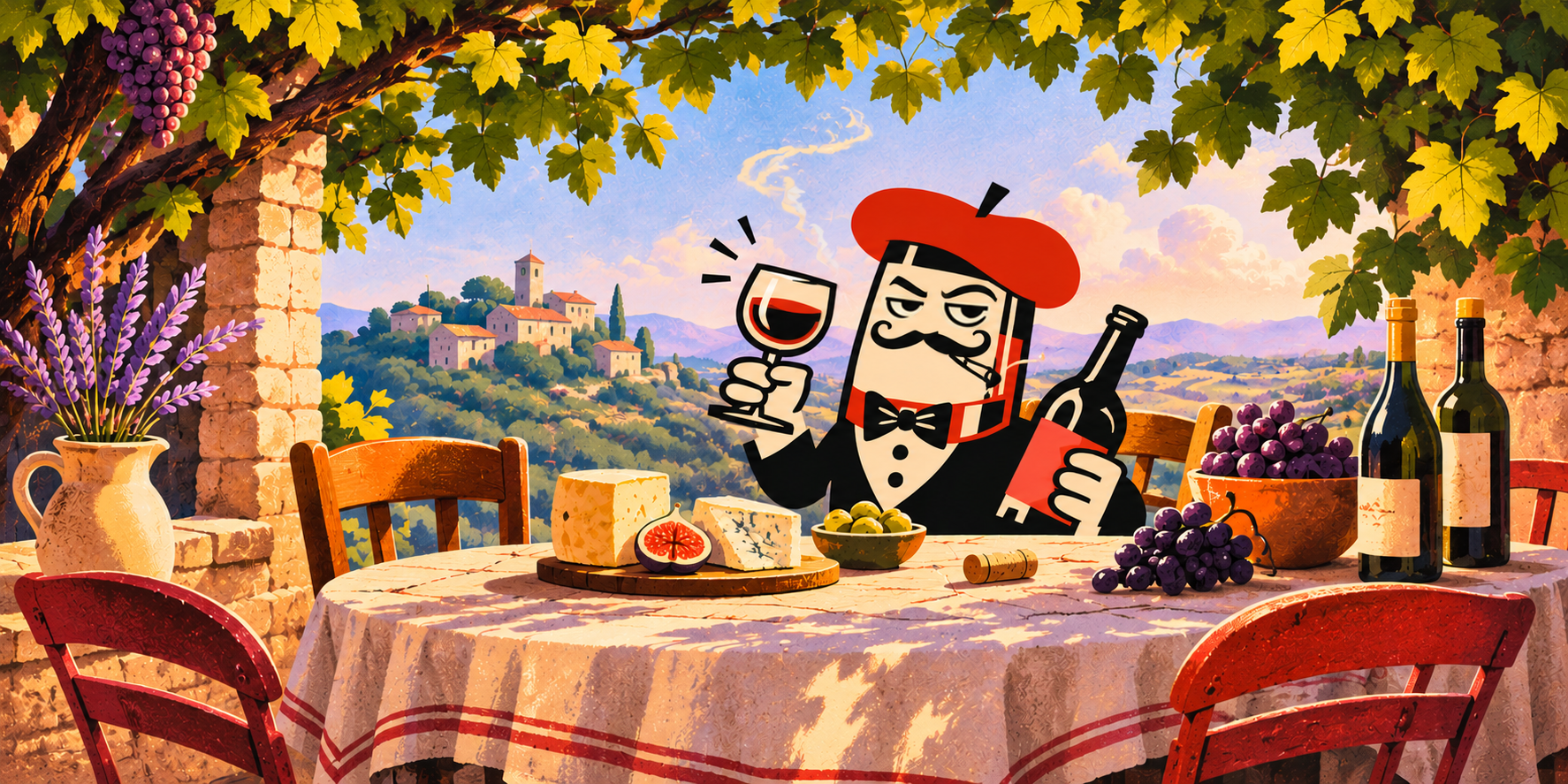
I built him using NanoClaw, gave him a slightly over-the-top French personality, some wine knowledge, and the ability to recognize a bottle from a photo of its label.
The idea was simple. We enjoy wine, but we're terrible at remembering what we've tried, what we thought of it, or whether we'd buy it again.
Pierre could help. We'd send him a photo, he'd tell us about the wine, offer an opinion (whether we wanted one or not), and remember what we'd been drinking.
A useful little agent for enjoying a glass of wine on the back patio.
That was the plan, anyway.
What does Pierre think?
Earlier this year, I took Pierre along on a trip to Provence.
Seven of us were staying at a friend's farm near Avignon, spending our days working, exploring, eating far too much cheese, and enjoying some excellent wine.
I thought it would be fun to ask Pierre about the bottles we were drinking.
By the second evening, something unexpected had happened.
People weren't asking me to look up the wine anymore.
They were asking, "What does Pierre think?"
And Pierre, being Pierre, always had an opinion.
He was knowledgeable, occasionally condescending, ridiculously enthusiastic, and generally convinced that his opinion was the correct one.
People started disagreeing with him, making jokes about him, and asking what he thought of bottles before we'd even opened them.
At one point, someone remarked that Pierre was having a good day.
Which is a pretty funny thing to say about a Slack bot.
By the end of five days and fifteen bottles (all in the name of research, obviously), Pierre had become something of a member of the group.
Nobody was confused about what he was. But he had a personality, knew his stuff, and contributed something to an experience we were already enjoying together.
I'd built a tool to remember the wine we drank.
Somewhere along the way, he'd become another guest at the table.
The conversation is Pierre
I've spent much of my career designing software and thinking about how people interact with it.
Normally, that means navigation, screens, workflows, onboarding, and all the other things that make an application usable.
But I hadn't really done any of that with Pierre.
He lived in Slack. No dashboard, no tasting forms, no carefully designed workflow for recording a bottle.
You just talked to him.
Send a photo. Ask a question. Tell him what you thought. Occasionally argue with him.
Nobody needed convincing or onboarding. Someone asked what Pierre thought, Pierre answered, and everyone joined in.
More importantly, people kept coming back.
I'm not sure the same thing would have happened if I'd built a conventional wine-tracking app and added an AI chatbot to it.
Because the conversation isn't a feature of Pierre.
The conversation is Pierre.
And people weren't just sharing information about wine. They were sharing an experience, with Pierre playing a small but entertaining part in it.
That's a pretty different starting point for designing a product.
So, naturally, I've built an app
There's some irony here, considering I've recently been writing about how I don't particularly want another app.
Apparently, I'm incapable of taking my own advice.
But Pierre feels different.
Rather than starting with a list of features and trying to convince people to use them, he started as something people were already using and enjoying.
So I've been turning that experiment into a proper product.
The goal isn't another enormous wine database with tasting forms, complicated ratings, and a dashboard full of bottles you scanned once and promptly forgot about.
I want to recreate some of what happened in Provence.
Take a photo of a bottle and see what Pierre thinks. Ask him what to order from a wine list. Tell him whether you liked something, and have him remember it for next time.
And, importantly, bring other people into the conversation.
We're exploring shared Tables, where friends can spend an evening with Pierre, talk about the wines they're drinking, and remember what they enjoyed without anyone having to maintain a wine spreadsheet.
There'll still be an interface. People need somewhere to have conversations, invite friends, and revisit their favourite wines.
But those things should support the experience, rather than become the experience.
An unexpected lesson
I've spent a lot of time experimenting with AI agents, trying to figure out what they can do, how autonomous they can become, and what makes them genuinely useful.
Pierre reminded me that sometimes the most interesting thing isn't how much an agent can do.
It's whether people actually want to interact with it.
He didn't need to take over the evening, manage our lives, or turn every conversation into a lecture about French viticulture.
He just needed to know his stuff, remember what mattered, have an opinion, and occasionally make us laugh.
I don't know whether everyone will find a slightly insufferable French AI sommelier as entertaining as we do.
But I'd rather build something people enjoy spending time with than another app full of features they'll never use.
So that's what we're building with Pierre. An AI wine companion with a good memory, strong opinions, and a slightly inflated sense of his own importance.
If you'd like to meet him, join the waitlist at winewithpierre.com.
I'm letting people in gradually, partly to make sure everything works, and partly to avoid bankrupting myself with AI costs. Pierre may not actually drink wine, but he's remarkably good at running up a tab.
And if you ask Pierre, I'm sure he'll tell you the whole thing was his idea.